Era una notte buia e tempestosa… L’incipit di Edward Bulwer-Lytton, da un suo libro del 1830, o la parodia fatta da Snoopy nel più vicino 1965, sono analogie distanti eppure per me rilevanti quando si parla d’acquarello. In realtà non era neanche notte, ma ancora pomeriggio, eppure altrettanto buio e tempestoso, uno di quei pomeriggi invernali come se ne vedono tanti a Edimburgo quando la luce è radente già dopo pranzo, e la pioggia e il vento non invogliano a far passeggiate. Così, vedendola aperta, più di quarant’anni fa, mi rifugiai alla Galleria Nazionale dove, come per incanto, mi si aprirono alla vista i 38 acquarelli di Turner appartenenti al Vaughan Bequest, un tesoro visitabile solo per un breve periodo ogni anno, in gennaio. Posseggo ancora quel cataloghino smilzo e spillato che acquistai come primo documento di una collezione di libri d’arte sull’acquerello inglese che negli anni avrei accumulato, bacino di tante visioni, e altrettante sfide. Turner non è riproducibile, e anche quando ci si riesce si rischia di risultare fuori luogo. Eppure, nulla è più d’ispirazione di quello che Turner ha ottenuto negli anni con l’acquarello: una modernità ante litteram, un prefigurare in tempi non sospetti tutta la mescolanza visionaria che sta in sospeso tra astrazione e figurazione, romanticismo e avanguardia novecentesca, un risultato che solo i grandi maestri contemporanei sapranno poi raggiungere, dichiarandosi eredi degli artisti del passato ma anche sperimentatori del presente.
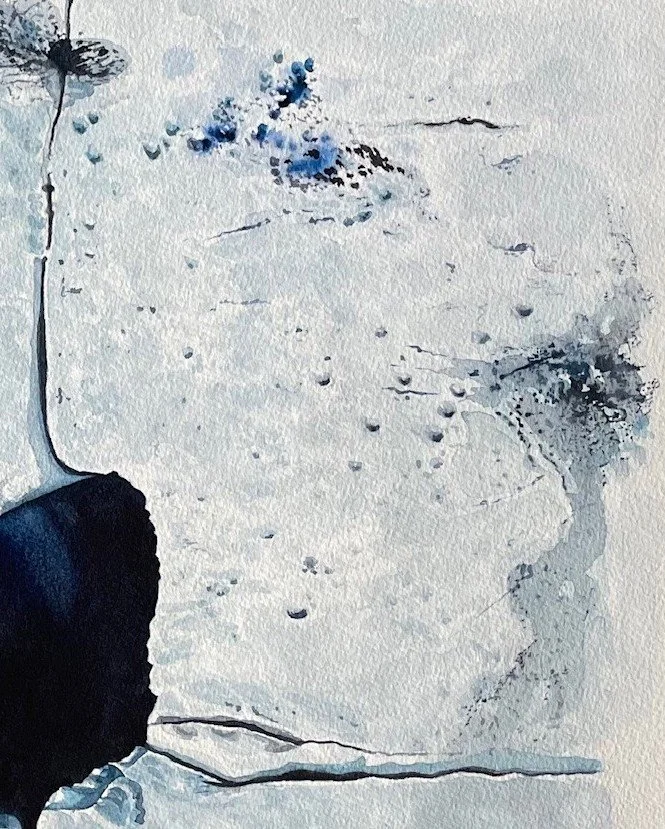
Da semplice appassionato di questa tecnica ho voluto sempre, quale perenne apprendistato, imitare i grandi maestri, con Turner in testa, ma anche Ruskin, Homer, Roberts, Wyeth, Sorolla, Bodmer, Pike, e Blockley. Forse i più esperti ritroveranno nei miei acquarelli gli elementi, i temi e le tavolozze di questi grandi maestri; eppure, come hanno ben individuato i miei amici negli scritti che hanno accompagnano una prima selezione delle mie opere, il tema è quasi sempre l’acqua, o meglio il mare, quasi come un percorso già tracciato, seppure inconsciamente. Non si può resistere all’attrazione di dipingere l’acqua con l’acquerello, o la mutevolezza del mare, sfidando le trasparenze che la natura crea su questo elemento. O di sentirsi, anche se per pochi istanti, sballottati dalla forza dell’acqua e dai processi naturali che, nel dipingere, intervengono a ogni pennellata: la gravità, la diluzione, l’evaporazione, la sedimentazione, la deriva, o il naufragio verso l’inatteso e il casuale. Più si usa questo medium e più si scopre che le cose più belle sono quelle non progettate, quelle casuali, o quelle che si riesce, anche se di rado, a far apparire come “gestuali” o impreviste. L’acquerello è avaro di concessioni, o successi, come la poesia; così, non si è mai paghi dei risultati. Ringrazio allora gli amici che hanno contribuito ad aiutarmi, e mi hanno sostenuto negli anni tesoreggiando le mie opere. Da solo avrei sempre dubitato della pertinenza di quei piccoli dipinti.
“It was a dark and stormy night…” – the beginning of Edward Bulwer-Lytton’s book, Paul Clifford, written in 1830, or Snoopy’s paradoxical use of the phrase, are distant yet relevant analogies for me when it comes to watercolour painting. In reality, it wasn’t even night, but still afternoon, yet equally dark and stormy, one of those winter afternoons so often seen in Edinburgh when the light fades after lunch, and the rain and wind discourage walking. So, more than forty years ago, seeing that it was open, I took refuge in the National Gallery where, as if by magic, I was presented with the thirty-eight Turner watercolours belonging to the Vaughan Bequest, a treasure open to visitors only briefly each January. I still have the slim, stapled catalogue I purchased as the first document in a collection of art books on English watercolours that I would accumulate, a repository of many visions and just as many challenges.
Turner cannot be imitated, and even when one succeeds to a degree, one risks looking out of time. Yet, nothing is more inspiring than Turner’s achievements in watercolour over the years: a modernity ante litteram, a prefiguration, at times unsuspected, of the entire visionary mix that lies suspended between abstraction and figuration, Romanticism and the twentieth-century avant-garde, an accomplishment that only contemporary masters will be able to achieve, declaring themselves heirs to the artists of the past but also experimenters of the present.
As a simple enthusiast of this technique, and as a lifelong apprentice, I have always wanted to imitate the great masters – Turner first and foremost, but also Ruskin, Homer, Roberts, Wyeth, Sorolla, Bodmer, Pike and Blockley. Perhaps the more experienced will see in my watercolours the elements, themes and palettes of these great masters. Yet, as my writer friends clearly identified in the texts they wrote to accompany an initial selection of my works, the theme is almost always water, or rather the sea, almost like a path already traced, albeit unconsciously. The attraction of painting water in watercolour is irresistible – for instance, capturing the mutability of the sea, challenging the transparency with which nature imbues this element. Or to feel, even if only for a few moments, tossed about by the force of water and the natural processes that, in painting, come with every brushstroke: gravity, dilution, evaporation, sedimentation, or the drifting towards the unexpected mysteriousness of the result. The more you use this medium, the more you discover that the most beautiful outcomes are not those that are planned, but those that happen by chance, or that you manage, however rarely, to make appear to be “gestural” or unexpected.
Watercolour grants few concessions or successes like poetry. It follows, then, that one is never satisfied with the results. I therefore thank the friends who have contributed to helping me and have supported me over the years by treasuring my work. On my own, I would always have doubted the relevance of those small paintings.